
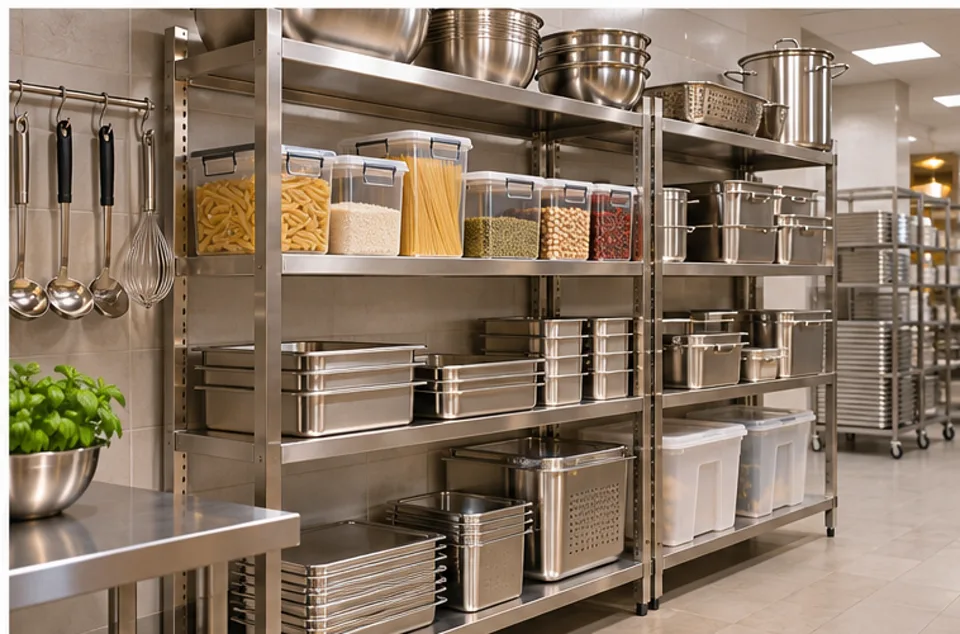
Compare the equipment format, workflow and site requirements before choosing commercial kitchen storage equipment.
Start with the job the equipment must do
Write a short operating brief around Separate dry ingredients, utensils, cleaning supplies and mobile stock. Choose shelving, bins or trolleys for the load and cleaning environment they will face. Include the menu or service period, who will operate the unit and the surrounding equipment. This helps suppliers recommend a configuration for your actual workflow rather than a generic catalogue description.
Match the format to capacity and services
Use Count containers and record their dimensions, combined weight and frequency of access. Compare shelf spacing and usable levels with the inventory you actually hold. Then review Confirm floor loading, wet-area exposure, wall fixing and castor suitability with the supplier and site team. Ask for the exact model documentation and identify any accessories needed to achieve the intended result.
Confirm the choice with your site information
Before approving a quote, share Keep fast-moving stock near its point of use and preserve clear routes for replenishment and cleaning. Ask the supplier to confirm model, dimensions, connections and included accessories in writing. Treat the listed image as illustrative where the page says so; availability and final specifications should be confirmed directly.
Request a quote